

Rubera Djuma and his wife, Habonimana Sifa, from Rwanda have faced many challenges since settling in Kalobeyei settlement in Kenya. Access to clean cooking technology has given them one less thing to worry about.
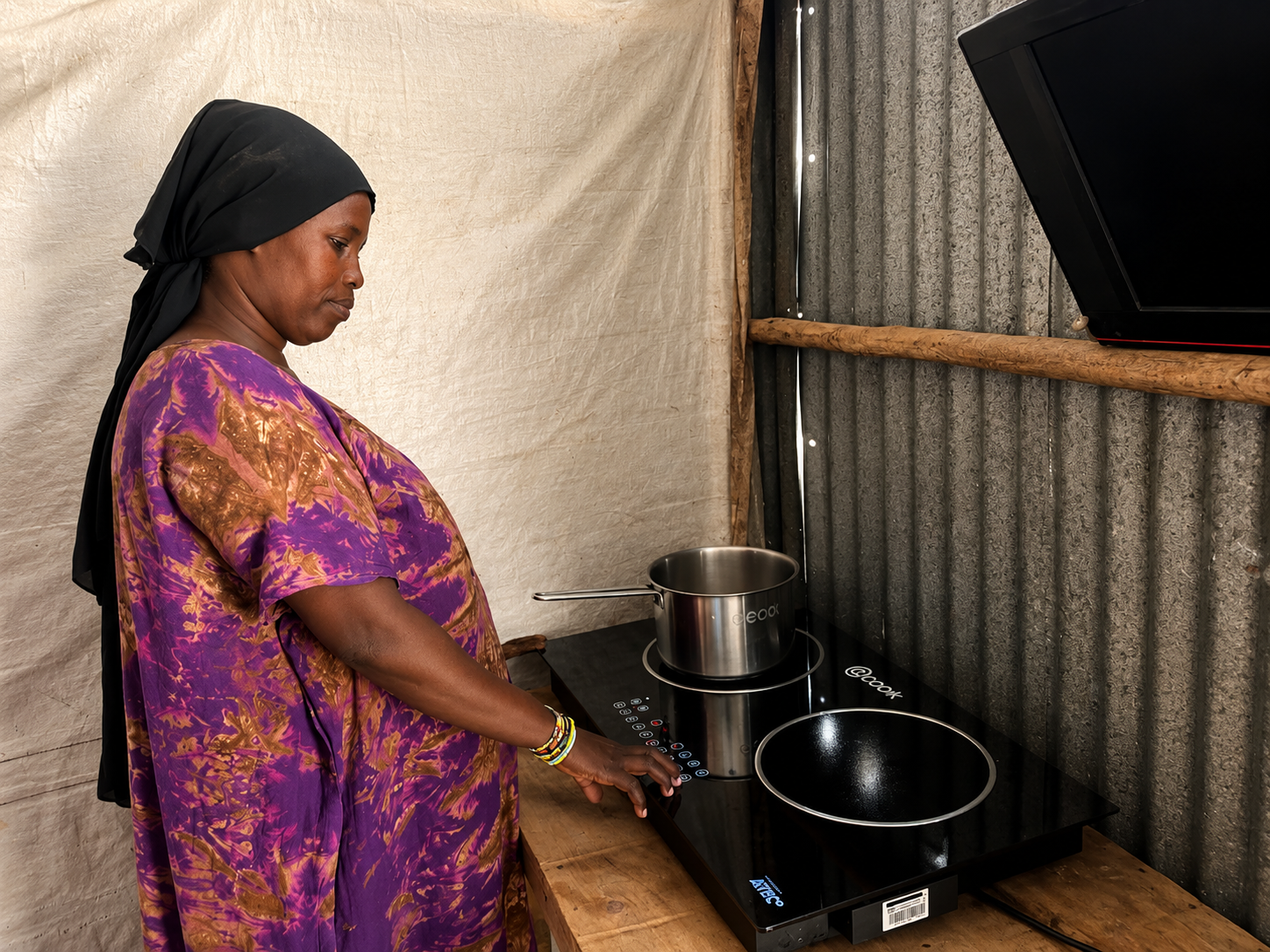
Rubera Djuma and his wife, Habonimana Sifa, from Rwanda have faced many challenges since settling in Kalobeyei settlement in Kenya. Access to clean cooking technology has given them one less thing to worry about.
Refugee camps are among the most vulnerable places exposed to climate change impacts, and energy access is rarely a priority as families strive to meet basic needs. An estimated 81% of displaced people in refugee camps use charcoal and firewood for cooking. In the Kakuma refugee camp and Kalobeyei settlement, households rely on minigrid energy distributed by Renewvia.
Rubera serves as a community Sheikh; he narrated the daily struggles of cooking with charcoal. Like many families in the settlement, they could not afford to buy charcoal in bulk and only bought in small quantities daily. He spent an average of Kshs. 650 ($0.50) a week to keep the fire going. After switching to ATEC induction cookers distributed in the area by Mwangaza Light, Rubera admits that the costs have been reduced by 78.5%.
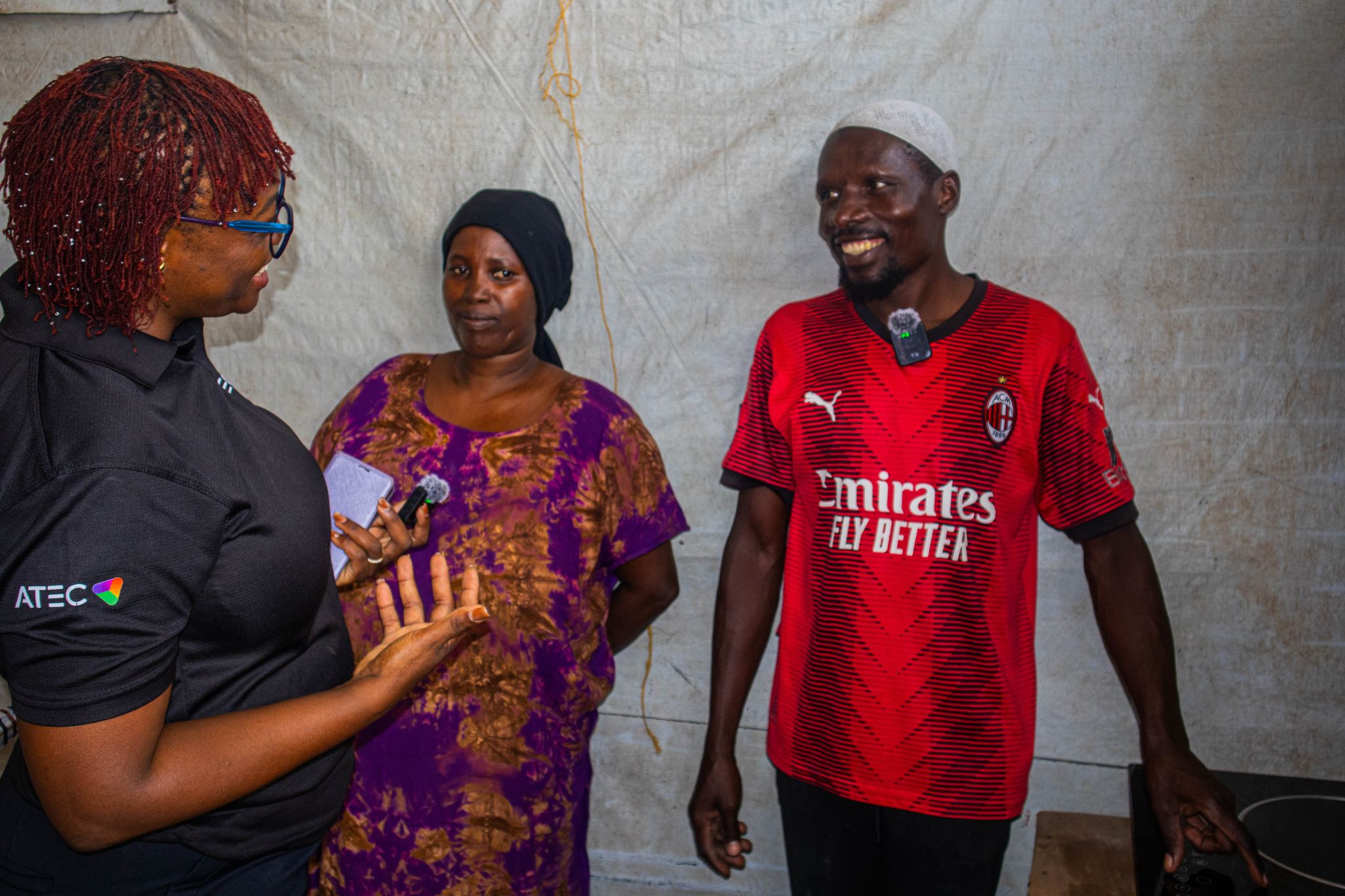
The ease and convenience of the stove has encouraged him to help his wife with cooking. He said that the charcoal stove was hard to light and kitchen duties were solely delegated to his wife. Rubera loves cooking rice. “This stove does not burn my rice, no matter which recipe I try,” he said, laughing that his wife has put on a few kilos since cooking became so fast and efficient.
Sifa confirmed this, saying that the cost saved from using ATEC’s induction stove is used to buy an extra meal. The family could only afford lunch and dinner, but now they have added breakfast. “With only Kshs. 20 ($0.15) to pay for power, I cook 3 times a day with the induction cooker.” Said Sifa.
The transformative impact is more than the cost savings: "I can even cook in my bedroom now," said Sifa, something charcoal jikos never allowed because of the smoke. Her 2-room ironsheets house is now smoke-free and in a settlement where water is scarce, she no longer needs extra water to scrub soot off her pots after every meal.
For Rubera and Sifa, the stove not only saved time, but also improved their diet and gave them a sense of what a dignified kitchen feels like. As they look towards the future, they hope to take their stove with them when they are repatriated to Rwanda.