
.jpg)

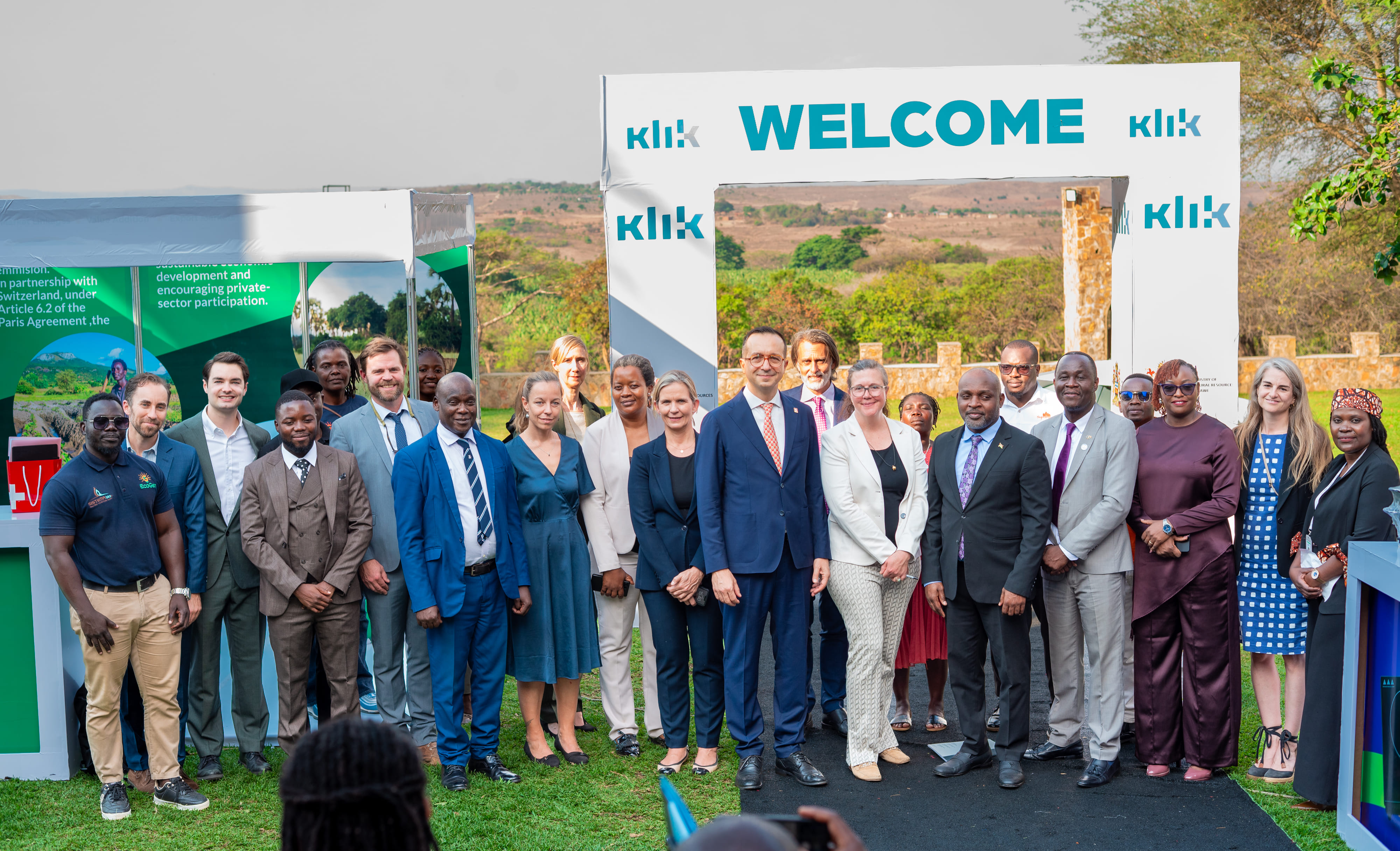
On October 8th 2026, ATEC showcased its electric cooking project at a high-level event in Lilongwe hosted by Malawi's Ministry of Natural Resources, the Embassy of Switzerland, and KliK Foundation.
ATEC’s project was one of the four mitigation activities KliK Foundation showcased as it officially launched Article 6.2 programmes under the bilateral climate agreement between Malawi and Switzerland under the Paris Agreement. These programmes are designed to generate high-integrity carbon credits for international carbon trading, channelling carbon finance towards emission reduction activities.
The project highlights the potential of international climate cooperation to translate emission reductions into meaningful economic and social benefits for communities while contributing to host countries' climate goals.
In Malawi, the majority of target households rely on charcoal, leading to greenhouse gas emissions, deforestation, and indoor air pollution. ATEC’s project aims to deploy 76,000 IoT-enabled smart induction electric cooking stoves to grid-connected households that primarily rely on charcoal as their main source of fuel for cooking in Lilongwe and Blantyre districts.
The IoT-enabled smart induction electric cooking stoves integrate high-efficiency induction technology in the stoves and support continuous energy metering and real-time data transmission via global SIM cards, enabling tracking and monitoring of emission reductions under Article 6.2. These capabilities strengthen the transparency and accountability of carbon credits generated by the project.
Through the transfer of Internationally Transferred Mitigation Outcomes (ITMOs) under Article 6.2, the project will unlock carbon finance for the host country and contribute to its Nationally Determined Contribution (NDC) and national climate goals.
Speaking during the event, the Deputy Minister for the Ministry of Natural Resources, Chipiliro Mpinganjira, praised the project’s potential to reduce deforestation and contribute to Malawi’s national climate goals. Having interacted with the technology firsthand, he highlighted the role of reducing household dependence on charcoal in protecting forests and advancing the country’s emission reduction targets.
Sharon Mlomba, a cookstove user from Zamkutu in Lilongwe, provided a live demonstration of how she operates the stove at home and highlighted the measurable cost and time benefits she has realised since adopting it.
“Before eCook, I used 3 bags of charcoal at MK45,000 each, which would cost me MK135,000 a month. With eCook, I only use MK50,000 of electricity all month and can direct the additional income to other household expenses." Sharon shared
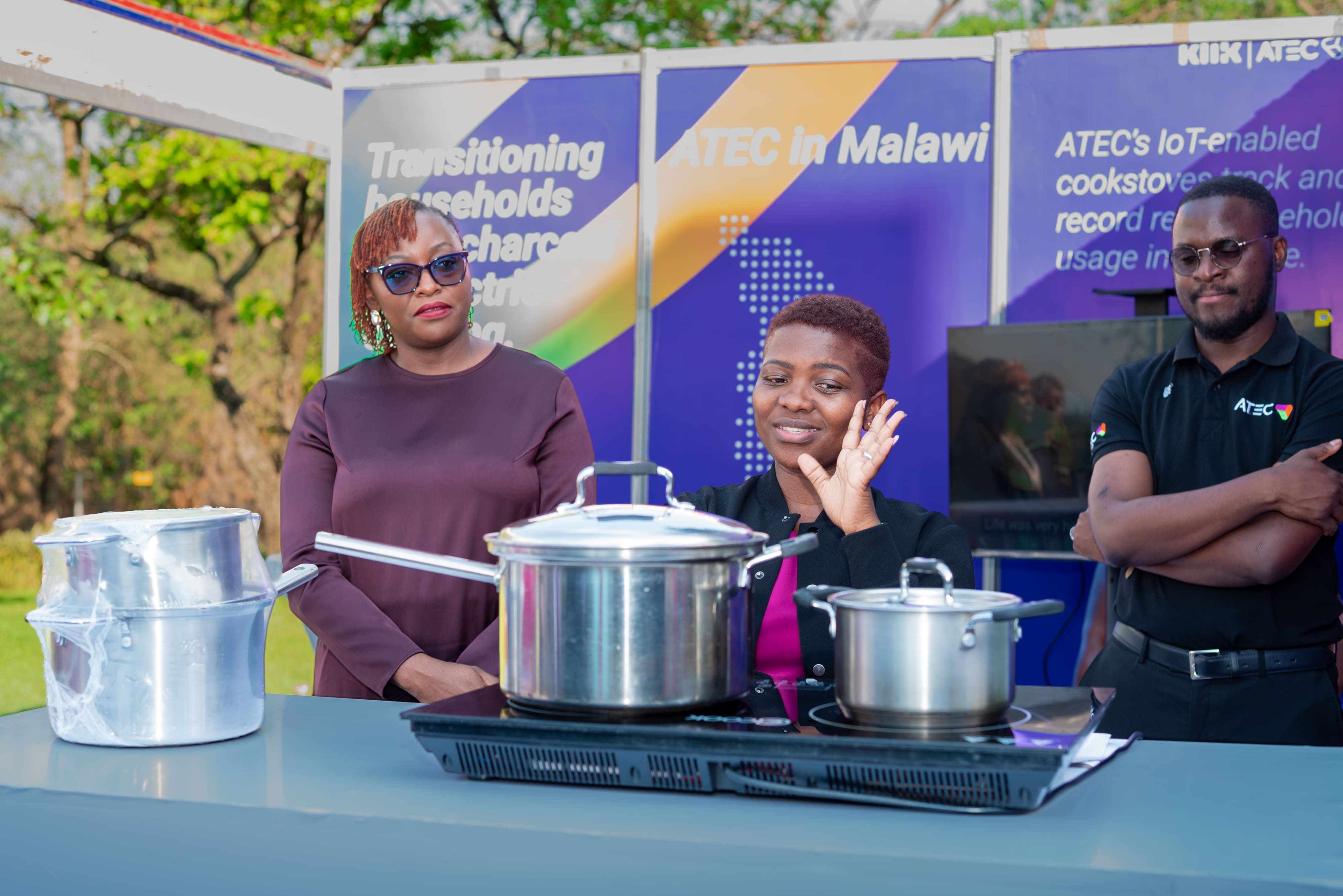
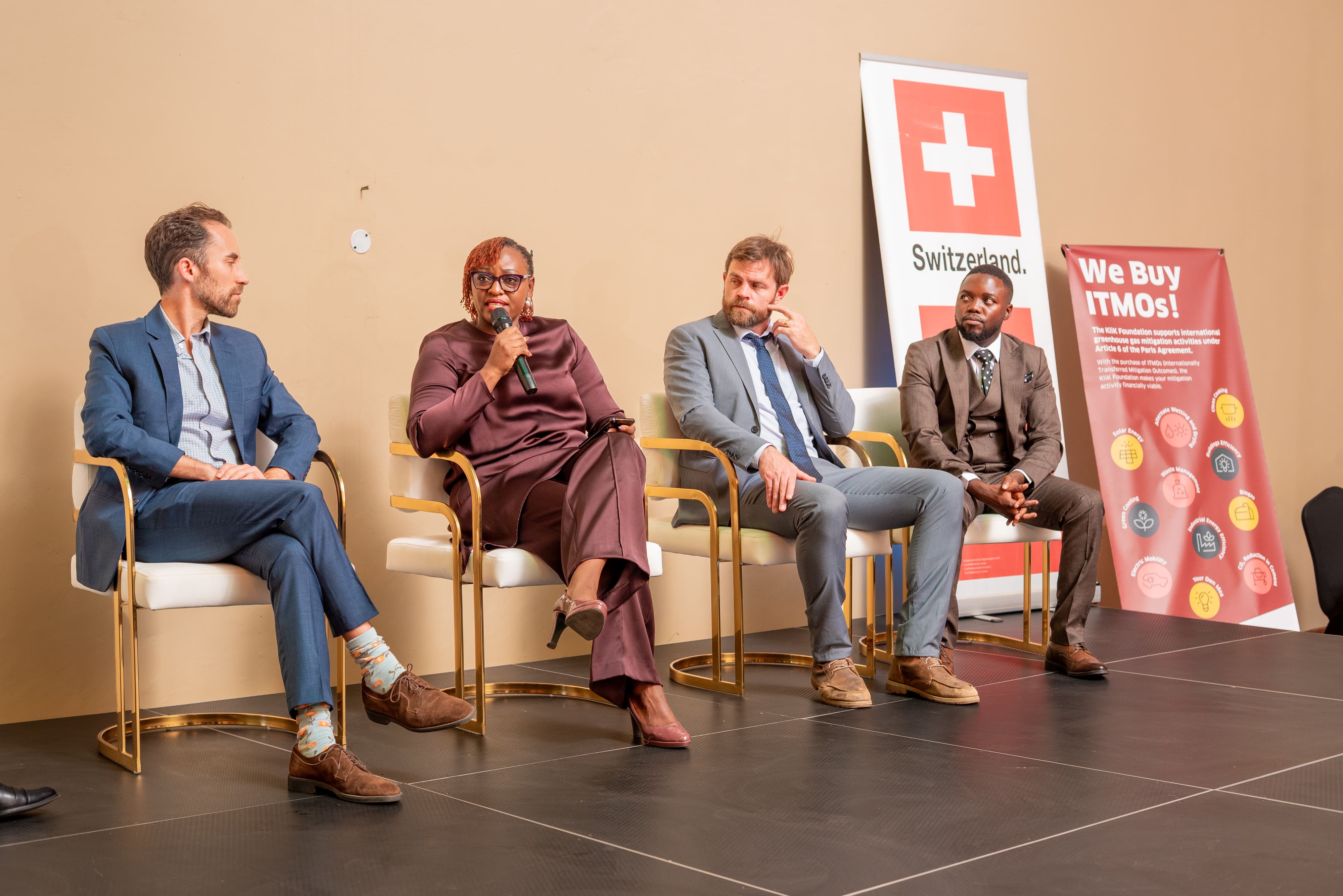
Speaking during the panel, Rahab Kagwanja, Chief Operating Officer at ATEC, highlighted how advanced induction technology combined with carbon finance is accelerating access to clean cooking in Malawi. She explained that induction cookers achieve 85–90% energy efficiency, nearly twice that of conventional electric hotplates, helping households reduce cooking costs while easing pressure on ESCOM’s constrained electricity grid.
Rahab also highlighted ATEC’s innovative Cook-to-Earn model, supported by the KliK Foundation, which uses real household usage data to give households weekly cashback based on their cooking activity, creating direct economic benefits.
"Through our cook-to-earn model, we are turning real household usage into an income-generating asset. By using real-time data to verify daily usage, every cooked meal contributes to high-integrity emission reductions while households get cashbacks every week”.
ATEC continues to accelerate access to clean cooking technologies for communities that need it most. Using electric cookstoves, dMRV technology and carbon finance, we deliver measurable climate impact and tangible co-benefits for communities. In partnership with the KliK Foundation under Malawi’s Article 6.2 programme, we are showing how high-integrity carbon markets can help reduce dependence on charcoal, protect forests, lower household cooking costs and advance national climate goals.